
In a Data Center, power reliability goes beyond having redundant power lines, generators and UPS systems. It is equally important to monitor their actual condition.
That is why at MEVSPACE, we monitor every UPS battery individually rather than treating the entire battery set as a single unit.
Every battery matters
UPS batteries operate in battery strings. The deterioration of a single battery can affect the entire string and, in extreme cases, reduce its ability to provide backup power.
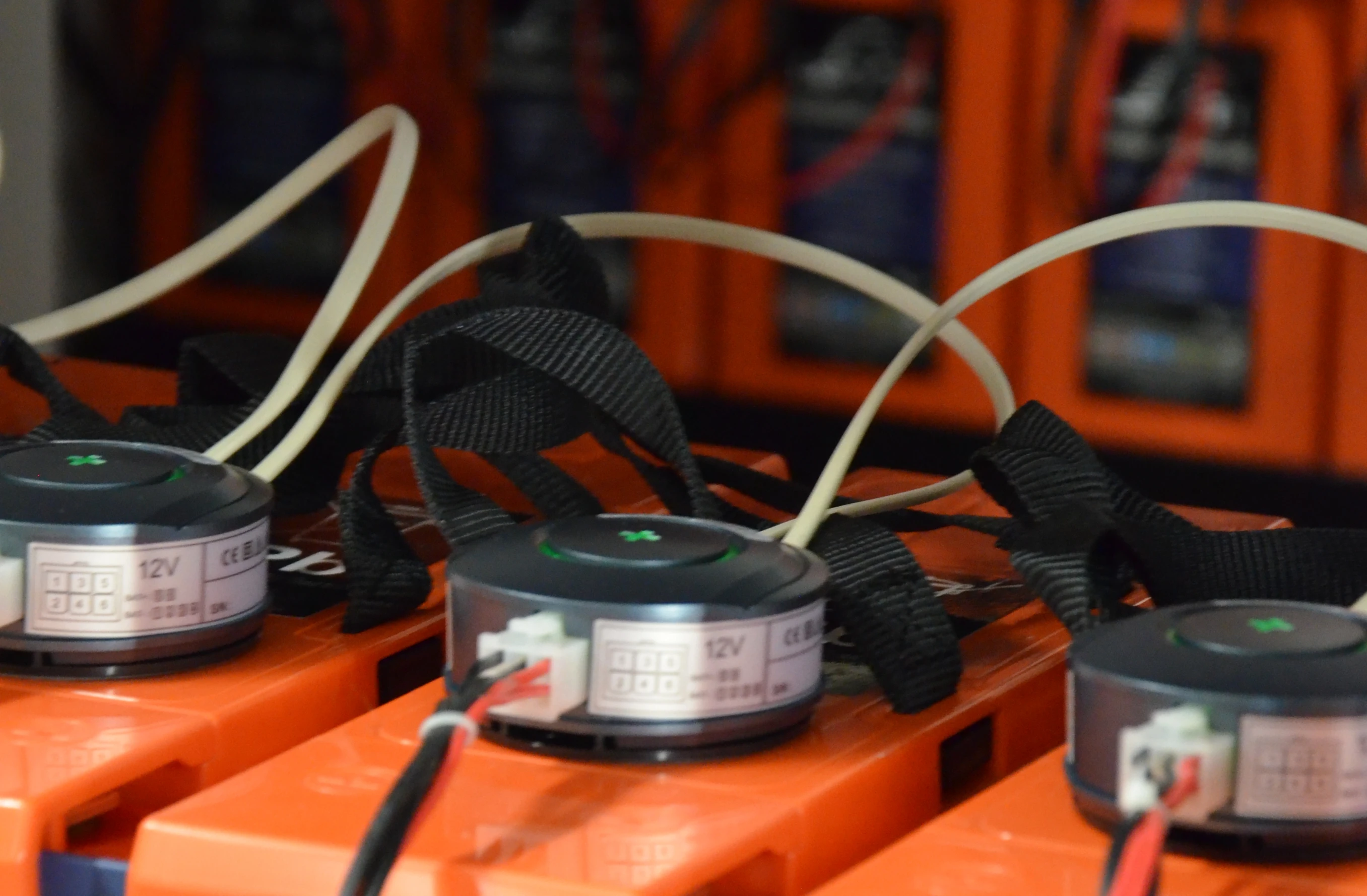
That is why we monitor, among other things:
- voltage,
- temperature,
- internal resistance,
- changes in these parameters over time.
This allows us to detect anomalies at the level of an individual component before they affect the operation of the entire system.
Why do we measure internal resistance?
A correct voltage reading alone does not necessarily mean that a battery is in good condition.
One of the parameters that helps us monitor battery aging is internal resistance. The measurement is performed during normal system operation using the AC Injection method (ACIR - Alternating Current Internal Resistance). A small AC signal is applied to the battery, and its voltage response is used to determine the internal resistance - without the need to disconnect the battery from the UPS.
However, the most important factor is not a single measurement, but the trend over time.
If the internal resistance of one battery gradually begins to deviate from the other batteries in the same string, this may be an early indication of deteriorating condition.
Detecting problems before battery failure
The greatest value comes not from a single measurement, but from continuously monitoring changes in battery parameters over time.
If the internal resistance of one battery starts to increase gradually, or its behavior begins to differ from the other batteries in the same string, we can treat this as a signal for an earlier inspection.
This means we do not have to wait for the battery to actually fail. We can plan an inspection or replacement during scheduled maintenance - before the battery's condition begins to affect the performance of the entire string.
In practice, monitoring allows us to respond to the first signs of battery deterioration rather than only reacting to an actual failure.